How Caffeine Affects Breast Milk and Your Baby

Published Date:May 20, 2025
By Ali Weatherford
I love coffee. I mean I REALLY love coffee. My second favorite job (after this one of course!) was in a coffee shop where we roasted our own beans and I had to learn to really taste the differences. I drink it black, and I’m picky. I get the expensive stuff. I also know that caffeine isn’t all that good for me, so I only allow myself the one precious cup in the morning and then cut off my caffeine there.
A lot of parents have concerns about caffeine and how much is safe to use when pregnant and breastfeeding. It can be really hard to give it up completely, but do you have to?
Is Caffeine Safe During Pregnancy?
We know that moderating caffeine is a good idea for everyone, but especially during pregnancy. The research about how much caffeine is safe is very mixed. Some research shows that too much caffeine can cause things like miscarriage, preterm birth, and low birth weight for babies. It can have certain side effects that might not be dangerous, but could make you feel worse during pregnancy like nausea, indigestion, or trouble sleeping. Most people don’t want MORE of those kinds of symptoms. It slightly increases blood pressure, which can be a concern for some people, especially during pregnancy. The evidence is mixed, and the safety level of an exact amount of caffeine has not been determined. For that reason, most resources recommend limiting your daily intake to 200mg. This chart shows how much caffeine is in typical food and drinks.
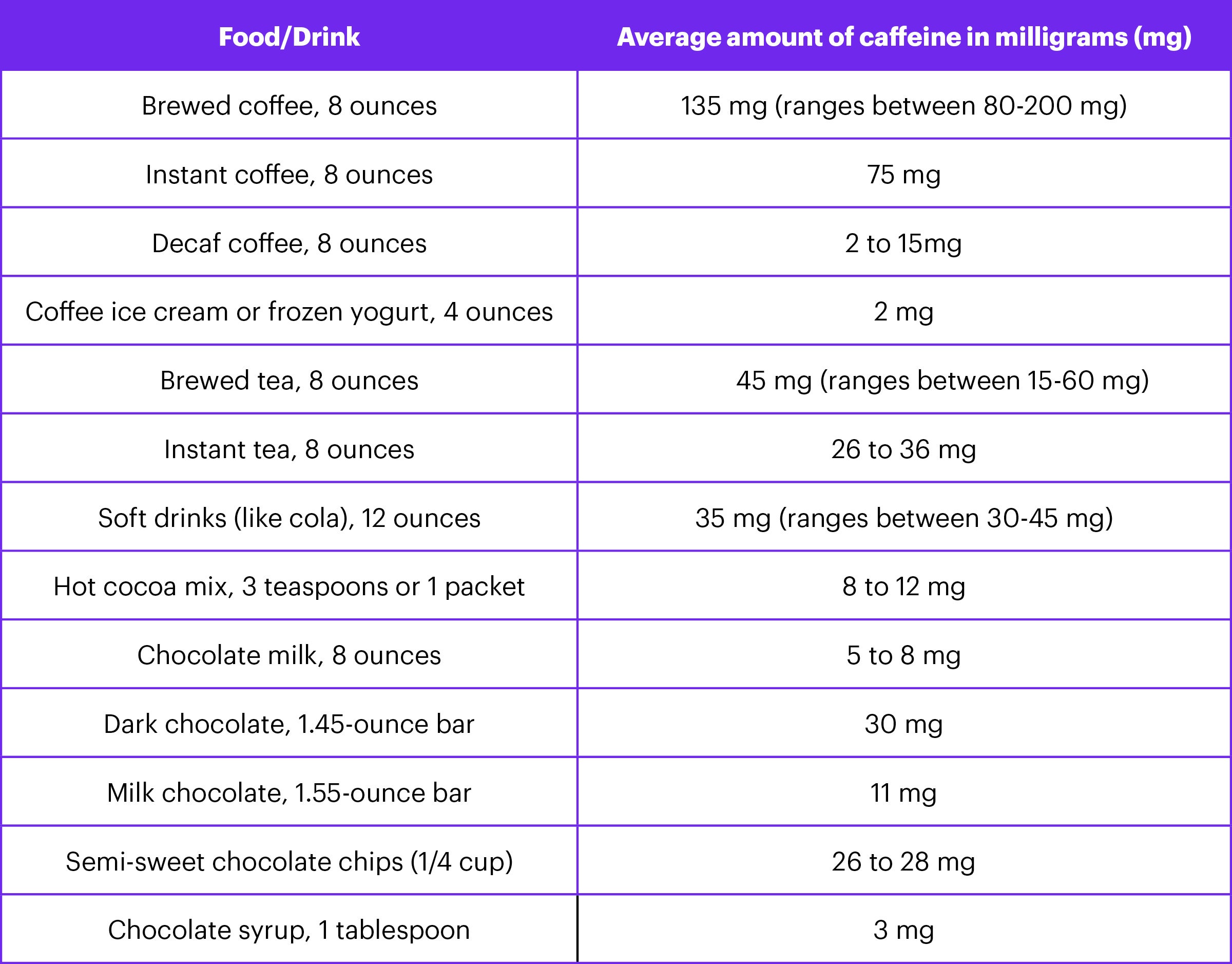
*Image courtesy of March of Dimes
Does Caffeine Pass Into Breastmilk?
If you are like me, you might be excited to be done with pregnancy so you can have more than one cup of coffee per day, BUT WAIT! If you are breastfeeding, you might want to keep limiting your intake.
Caffeine does get into your breastmilk supply and is generally at peak levels at 1-2 hours after drinking. That means it gets into the breastmilk quickly.
After about seven hours, much of the caffeine in the milk is gone, but there are some variations.
It’s important to remember that the baby only gets a small amount of the caffeine that you consume. That number might be as low as 1.5%. So, smaller doses for you=smaller amounts for your baby. Older healthy babies can usually clear the caffeine from their bodies in a similar amount of time that it takes for your body to clear it. However, premature babies, babies under 6 months, and babies with other health conditions might take longer to clear the caffeine.
So, what does this mean for your life as a breastfeeding parent? Basically, if you have one cup of coffee in the morning right after feeding your baby, and then you don’t breastfeed again for 2-3 hours, your baby won’t get very much caffeine at all because the caffeine levels have already peaked and are coming down. And the caffeine that your baby does get at that time in the late morning will likely be gone by bedtime, as long as you don’t have any more that day. If you continue to consume caffeine, it can add to the amount in your breastmilk and ultimately in your baby’s body.
Research has shown that keeping the caffeine to a maximum of 200-300mg of caffeine per day or approximately 1-2 cups of coffee, means you won’t likely see any impact on your baby’s behavior or health. Remember that mg or milligrams of caffeine is different from the amount of the food or drink you’re consuming. One 8oz cup of coffee can have 200mg of caffeine in it if it’s a stronger brew. It might also have less. If you consume a lot more than the recommended amount, it might cause some changes in your baby, such as:
- Fussiness
- Jitteriness
- Trouble settling
- Poor sleep patterns
Large amounts of caffeine in breast milk can also reduce iron levels. Your baby relies on the iron in breast milk for their daily needs, so it’s important to keep those numbers at a healthy level.
Tips to Safely Enjoy Caffeine While Breastfeeding
While you don’t necessarily have to eliminate caffeine completely, it’s a good idea to minimize it. Here are some tips:
- Remember that other foods and drinks have caffeine and you want to make sure you count that too. For example, some sports drinks and energy drinks, kombucha, matcha, sodas, guarana, decaffeinated coffee, energy bars, and anything with chocolate contain some caffeine.
- Some over-the-counter medications contain caffeine, especially those intended to help with headaches or migraines or hangovers.
- Have your caffeine early in the day to minimize the effects for bedtime.
- Have your caffeine right after breastfeeding. That will give your body some time to break down the caffeine you just had before it’s time to breastfeed again.
References:
Caffeine – Drugs and Lactation Database (LactMed®) – NCBI Bookshelf

